Showing posts with label history. Show all posts

Monday, 27 January 2014

Maharani Sita Devi Sahib - "Indian Wallis Simpson"


Maharani Sita Devi Sahib of Baroda, born May 12, 1917 in Madras, India, died February 15, 1989 in Paris, France. She was known as the "Indian Wallis Simpson". She was a colourful lady who led an extravagant life for over 40 years and was a member of the international jet set. The Maharani was the daughter of the Zamindar of Pithapuram - Sri Raja Rao Venkata Kumara Mahipati Surya Rau Bahadur Garu and his wife Sri Rani Chinnamamba Devi of Mirzapuram.
Sita Devi first married Apparao Bahadur, Zamindar of Vayyur. By him she had three children.
She met her second husband, Maharajah Pratap Singh Gaekwar of Baroda, at the Madras horse races in 1943. The Maharajah was, at that time, considered the eighth richest man in world. It was also reported he was the second richest Indian prince. The Maharajah was mesmerized by Sita Devi. The lovers consulted with his legal team. The lawyers recommended that the Hindu Sita Devi convert to Mohammedanism. That would dissolve her marriage to the Zamindar under Indian law. She embraced Islam only to then adopt Hinduism once again. The Maharajah took her as his second wife. Which caused consternation with the British authorities, as this violated the anti-bigamy laws that the previous Maharajah of Baroda enacted. The British Viceroy in New Delhi summoned the Gaekwar to contest this marriage. The Maharajah argued that the law applied to the subjects of Baroda, and that he being their monarch was exempt from this law. This was confirmed by the Viceroy's legal advice. The British Government accepted the marriage, but didn't refer to the Maharani as "her highness" as was the protocol for the princely states.
In 1946, The Maharajah took his second wife on a tour of Europe. The reason for their visit was to find a suitable residence away from India, because they feared the integration of the princely states into the Union threaten their extravagant way of life. They found that the independent principality of Monaco was a suitable place to set up their second home. They bought a mansion in Monte Carlo and the Maharani took up permanent residence. The Maharajah visited frequently bringing some of the great treasures of Baroda to Monaco. The Maharani became the custodian of these treasures.
The couple also made two trips to the United States after the war. They went on a spending spree, buying all types of luxurious items. It was widely reported that they spent ten million dollars on one of those trips. This was much to the Indian Government's chagrin. Indian Officials did an audit of the principality's finances. They concluded that the Maharajah had taken several large interest free loans from the Baroda treasury. They demanded that it be returned. The prince complied by making several payments from his eight million dollar per year income.
The princely couple transferred a copious amount from the Baroda treasury, including some of its most famous jewellery, including four celebrated pearl carpets, a famed seven-strand necklace of priceless pearls (called the Baroda pearls), a three-strand diamond necklace with the famous Pink Brazilian Star of the South 128.80-carat (25.76 g) diamond and the English Dresden 78.53-carat (15.71 g) diamond. The princely couple also had custody of the Empress Eugenie and the yellow Moon of Baroda diamonds. When Baroda was integrated into the newly independent India, the Government was appalled to find that the Baroda Treasury had been looted. The Indian Officials were eventually able to recover some of the items, but some of the jewels had been transferred to the Maharani's ownership. She had some of the jewels reset to make it more difficult for India to reclaim them.
The Baroda Pearls, before and after
Years after the Maharani's death some of the precious items were discovered. In 1994 the pearl carpet were found in a Geneva vault. It was sold to an Arab prince for $31 million. The Star of the South and other gems were located with jewellers in Amsterdam.
Eventually, India, due to the discrepancies and possible fraud, deposed the Maharajah in 1951 and his eldest son by his first wife succeeded him. The couple technically, were not heads of state any longer, but they insisted on still being referred by their former titles.
She gave the Maharajah one son, born in 1945, his name was Sayaji Rao Gaekwar. Nicknamed "Princie", he was the apple of her eye.
She attended some of the most exclusive events on the globe and partied with other international luminaries, i.e. Aristotle Onassis.
In 1953 the Maharani sold a pair of bejewelled anklets to Harry Winston. They had several large emeralds and diamonds. The jeweller set these stones into a spectacular necklace that was purchased by the Duchess of Windsor. The Duchess wore this to a 1957 New York ball that was also attended by Sita Devi. When other guests were admiring the necklace. The Maharani was heard to exclaim that those jewels looked just as nice on her feet. The embarrassed Duchess returned the necklace to Harry Winston.
She was a car enthusiast and was reportedly very fond of her Mercedes W126 which was custom made for her by Mercedes Benz. At the 1969 Ascot Gold Cup she invited guests to touch the 30-carat (6.0 g) sapphire on her right hand for good luck. Esquire Magazine included Sita Devi and Princie on their list of "fun couples" for 1969.
Sita Devi divorced the Gaekwar in 1956. He promptly moved to London.
Even after the dissolution of her second marriage, she clung to her exalted title. Her Roll-Royce still sported the armorial insignia of Baroda. She would reminisce about the days, when she was referred to as royalty and received 101 gun salutes, this was, at best an embellishment of the truth; the British never gave these privileges to any of the Indian princes. Prince Rainier awarded citizenship of Monaco to both Sita Devi and Princie. She maintained a Paris apartment as well. She continued to live in grand style, drinking Baron de Rothschild’s Bordeaux, rearranging her Louis XVI furniture and attending exclusive parties. When travelling she brought along a large wardrobe, reported to be a thousand saris, hundreds of Paris of shoes and of course her jewellery. But her finances were eventually exhausted enough for her to secretly auction some of her beloved jewels in 1974.
The Maharani suffered a tragic event in 1985, Princie's life ended one night when after his 40th birthday, he committed suicide. His death was attributed to alcoholism, drug addiction and his voracious sexual appetite. Sita Devi herself died four years later of natural causes. Some speculated it was due to a broken heart.
Read more ...

QUEEN VICTORIA RECEIVED A BEHEMOTH CHEESE AS A WEDDING PRESENT


During the celebration of her wedding to her first cousin Prince Albert in 1840, Queen Victoria received the gift of a 1250-pound, 9-foot-diameter cheddar. It was produced by a cooperative of cheesemakers from two villages, according to Steven W. Jenkins in Cheese Primer. “Perhaps baffled by how to serve it, she sent the cheese off on a tour of England,” Jenkins writes. “When attempts were made to return it to her, she refused to take it back.”

Cheese is a food derived from milk that is produced in a wide range of flavors, textures, and forms by coagulation of the milk protein casein. It comprises proteins and fat from milk, usually the milk of cows, buffalo, goats, or sheep. During production, the milk is usually acidified, and adding the enzyme rennet causes coagulation. The solids are separated and pressed into final form. Some cheeses have molds on the rind or throughout. Most cheeses melt at cooking temperature.

Hundreds of types of cheese from various countries are produced. Their styles, textures and flavors depend on the origin of the milk (including the animal's diet), whether they have been pasteurized, the butterfat content, the bacteria and mold, the processing, and aging. Herbs, spices, or wood smoke may be used as flavoring agents. The yellow to red color of many cheeses, such as Red Leicester, is produced by adding annatto. Other ingredients may be added to some cheeses, such as black peppers, garlic, chives or cranberries.
Read more ...

First needles were made of bone or wood


A sewing needle is a long slender tool with a pointed tip. The first needles were made of bone or wood; modern ones are manufactured from high carbon steel wire, nickel- or 18K gold plated for corrosion resistance. The highest quality embroidery needles are plated with two-thirds platinum and one-thirds titanium alloy. Traditionally, needles have been kept in needle books or needle cases which have become an object of adornment. Sewing needles can also be kept in an etui, a small box that held needles and other items such as scissors, pencils and tweezers.
A needle for hand sewing has a hole, called the eye at the blunt end to carry thread or cord through the fabric after the pointed end pierces it.
A variety of archaeological finds illustrate sewing has been present for thousands of years. The earliest bone needle dates to 61,000 BC and was discovered in Sibudu Cave, South Africa. The Romans left elaborate traces of their sewing technology, especially thimbles and needles. Even earlier Stone Age finds, such as the excavations on the island of Öland at Alby, Sweden, reveal objects such as bone needle cases dating to 6000 BC. Ivory needles were also found dated to 30,000 years ago at the Kostenki site in Russia. A bone needle, dated to Aurignacian, was discovered in Potok Cave (Slovene: Potočka zijalka) in the Eastern Karavanke, Slovenia.Native Americans were known to use sewing needles from natural sources. One such source, the agave plant, provided both the needle and the "thread." The agave leaf would be soaked for an extended period of time, leaving a pulp, long, stringy fibers and a sharp tip connecting the ends of the fibers. The "needle" is essentially what was the tip end of the leaf. Once the fibers dried, the fibers and "needle" could then be used to sew together skins and other items used in a cloth-like manner.
Read more ...

Ferdinand Magellan

Ferdinand Magellan.jpg

Ferdinand Magellan was born in Portugal, either in the city of Porto or in Sabrosa, circa 1480. His parents were members of the Portuguese nobility, so after their deaths, when he was just 10 years old, Magellan became a page for the queen. Magellan studied at Queen Leonora's School of Pages in Lisbon and spent his days poring over texts on cartography, astronomy, and celestial navigation—subjects that would serve him well in his later pursuits.
Navigator and Explorer
In his mid-20s, Magellan joined a Portuguese fleet that was sailing to East Africa. He soon found himself at the Battle of Diu, in which the Portuguese destroyed Egyptian ships in the Arabian Sea. He also explored Malacca, located in present-day Malaysia, and participated in the conquest of Malacca's port. It is possible that he sailed as far as the Moluccas, islands in Indonesia, then called the Spice Islands. The Moluccas were the original source of some of the world's most valuable spices, including cloves and nutmeg. The conquest of spice-rich countries was, as a result, a source of much European competition.
While serving in Morocco, Magellan was wounded, and walked the remainder of his life with a limp. After his injury, he was falsely accused of trading illegally with the Moors, and despite all of his service to Portugal, and his many pleas to the king, any further offers of employment were withheld him.
In 1517, Magellan moved to Seville, Spain, to offer his skills to the Spanish court. In the three years following his departure from Portugal, he had religiously studied all of the most recent navigation charts. He had also benefited from the mistakes and discoveries of several other explorers—Christopher Columbus's "discovery" of North America and Vasco Núñez de Balboa's march across the Panamanian isthmus to the Pacific Ocean were just two of the many events that inspired Magellan's bold quest for an all-water passage to farther-flung, spice-rich lands.
Magellan's Legacy
Though Magellan died before the voyage was completed, he is often credited with the first circumnavigation of the earth as he initially led the voyage. He also discovered what is now called the Strait of Magellan, named the Pacific Ocean, and South America's Tierra del Fuego. Magellanic Clouds in space were also named for him, as his crew was the first to view them while sailing in the Southern Hemisphere. Most important to geography though, was Magellan’s realization of the full extent of the earth- something that significantly aided in the development of later geographic exploration and the resulting knowledge of the world today.
Read more ...

Franz Ferdinand and his tragic love story triggered world war 1


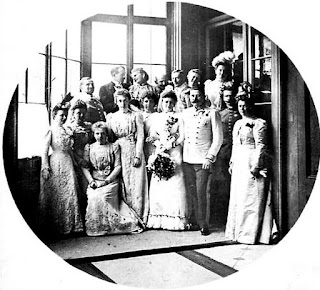
Sophie Chotek von Chotkova was the daughter of the chief equerry at the Imperial Court in Vienna. When a young woman, Sophie became lady in waiting to the Archduchess Isabella of Pressburg. Archduke Franz Ferdinand, heir to the Austro-Hungarian throne, first met Sophie at a dance in Prague in 1888. The couple fell in love but although Sophie came from a prominent Bohemian family, Franz Ferdinand knew that she would not be accepted as the wife of the future emperor.
Sophie and Franz Ferdinand kept their relationship a secret for over two years. When Franz Ferdinand began to make regular visits to the home of Archduke Friedrich of Pressburg, it was assumed he had fallen in love with his eldest daughter, Marie Christine.
One evening, after Franz Ferdinand had been staying at the home of Archduke Friedrich, a servant found a watch and locket he had left behind. When the Archduchess opened the locket, she found it contained a photograph. She expected it to be a picture of her daughter, Marie Christine, and was shocked and angry to discover it was of Sophie, her lady in waiting. Sophie was immediately dismissed and the knowledge of her relationship with Franz Ferdinand created a public scandal.
Franz Ferdinand, beloved husband of Sophie Chotek
Emperor Franz Josef immediately made it clear to Archduke Franz that he would not be allowed to marry Sophie. To be an eligible partner for a member of the Austro-Hungarian royal family, you had to be descended from the House of Hapsburg or from one of the ruling dynasties of Europe.
Franz Ferdinand insisted he would not marry anyone else. Emperor Wilhelm II of Germany, Tsar Nicholas II of Russia and Pope Leo XIII all made representations to Franz Josef on Franz Ferdinand's behalf arguing that the the disagreement was undermining the stability of the monarchy.
In 1899 Emperor Franz Josef agreed a deal with Franz Ferdinand. He was allowed to marry Sophie but it was stipulated that her descendants would not be allowed to succeed to the throne. It was also pointed out that Sophie would not be allowed to accompany her husband in the royal carriage nor could she sit by his side in the royal box.
Franz Josef did not attend the wedding. Nor did his brothers or their families. The only people of the royal family who went to the ceremony was Franz Ferdinand's stepmother, Maria Theresia, and her two daughters. Over the next few years the couple had three children: Sophie (1901), Maximilian (1902) and Ernst (1904).
In June of 1914, Sophie traveled with her husband to Sarajevo. While driving to City Hall, a would-be assassin threw a bomb at her husband which missed, exploding nearby. After the assassination attempt, Franz Ferdinand wanted to send Sophie out of town for her safety. She insisted on staying beside him for the remainder of the tour. While driving from City Hall to the hospital, to visit those injured in the bombing, another assassin (Gavrilo Princip) shot Franz Ferdinand in the neck and Sophie in the abdomen. Franz died within minutes, his last words were to his1917 stamp honoring Franz and Sophie. "dearest Sophie", imploring her to live for the sake of their children. Sophie died less than an hour later from internal bleeding. The assassinations, along with the arms race, nationalism, imperialism, militarism, and the alliance system all contributed to the beginning of World War I, which began less than two months after Franz Ferdinand's death, with Austria-Hungary's declaration of war against Serbia.
Sophie apparently bore the insults she had to endure with dignity and more good humor than Franz Ferdinand. One of the reasons the couple made their ill-fated trip to Sarajevo was that, as their activities in Bosnia-Herzegovina would not be subject to the same rigid rules as in Vienna, Franz Ferdinand could insist that Sophie be treated with the deference he felt she was due. (“If Franz Ferdinand Had Not Loved His Wife” is the title of a well-known article on an alternative history of World War I.) After the assassination, even in death, protocol had to be observed: since Franz Ferdinand knew that the Court would never allow Sophie to be buried in the Imperial Vault at the Kaisergruft in Vienna, he made arrangements for tombs at Schloss Artstetten, one of his castles.
Read more ...

What started world war I ?

Gabro Princip just arrested by police

Gabro Princip as he is arrested shortly after assassinating Prince Franz Ferdinand in Sarajevo (Photo credit: Wikipedia)

World War 1 was caused by a series of events triggered by Serbia’s response to Austria-Hungary’s demands, and the treaty alliance system that ensured that many other countries would be drawn into the conflict.
At the start of World War One, Europe was a powder keg waiting to be lit. As soon as Archduke Franz Ferdinand – the heir of Austria-Hungary’s throne – was assassinated on June 28, 1914, the fuse was lit. Ferdinand’s death happened under the care of the Black Hand, a Serbian nationalist secret society and it caused a series of events culminating into the world’s first ever global war.
Common knowledge suggests that the war started all because of the assassination of Archduke Franz Ferdinand of Austria but this notion isn’t 100% correct.
Austria-Hungary’s Reaction to the Assassination of Their Heir
Surprisingly, the people did not care about the assassination itself. Even the Austrian newspapers reported that it was a general consensus amongst political circles that the assassination was for the best. The emperor Franz Josef expressed his relief because he didn’t like Ferdinand at all.
Nobody cared about the assassination itself, but there had been thoughts of a ‘preventative war’ that they wanted to wage against Serbia. This war was meant to be short and sweet but due to the treaty alliance system that was in place, a small conflict turned into one of the bloodiest wars in human history with over 15 million deaths.
Austria-Hungary reacted to the death of their heir by taking the opportunity to come down strong on the Serbians to crush the nationalist movement residing in the country and thereby cementing their influence on the Balkans. They now had the support of the German’s who promised that they would aid in a war with Serbia, and possibly Russia if they chose to go into battle.
Austria-Hungary did not expect Russia to join in on the war as it was expected to be a small one that would be over fairly quickly.
After waiting three weeks, Austria-Hungary issued Serbia an ultimatum with demands that the assassins be brought to justice. Austria-Hungary issued an ultimatum to Serbia with severe terms hoping that Serbia would deny compliance and they would be able to go into a limited war to reclaim territory on the Balkans.
Serbia got the ultimatum and they responded in a positive manner, but changed a few clauses in their response. Austria-Hungary saw this as a reason to go to war.
Read more ...

Sunday, 26 January 2014

Uday Hussien : Career of Rape ,Murder,Torture


Uday was a monster even by the standards of Saddam Hussein's Iraq, a sadist with a taste for cruelty so extreme that even his father was forced to acknowledge that his first-born son would not be a worthy heir.
And yet for all that Uday Saddam Hussein symbolised the brutality of the Iraqi regime, his powers were severely circumscribed. Although he retained the privileges of the much-indulged son of a dictator, he was shunted from the real centres of power in the military and security services by his quieter, younger brother Qusay.
Although Uday nominally had a role in politics - following his election to parliament with 99% of the vote in 1999 - he was studiously absent from Iraqi television during the dying days of the regime.
It was clear controllers realised that showing too many pictures of the most hated man in Iraq was hardly going to spur resistance.
It was not the life that Uday had intended. Of Saddam's two sons, he was the flamboyant one - towering well over 6ft, with a penchant for fast cars and loud and drunken parties, expensive suits and flowing robes, as well as murder, rape and torture.
His public duties ranged from the Iraqi Olympic Committee and the national football team, to Babel, supposedly an independent newspaper, and Shabab, or youth television, to the Iraqi Photographers' Association. He also was in charge of the dreaded Saddam Fedayeen militia.
For those unfortunate enough to have strayed across his path, Uday's reasons for taking on such a public life were pathetic: he wanted to build a public profile in preparation for taking over from Saddam.
The search for public approbation appears to have taken over in the mid-1980s when Uday first took a close interest in sport. Footballers say he never really understood or showed much interest in the game itself, but was desperate enough for a win that he would phone up the dressing room during half-time to threaten to cut off players' legs and throw them to ravenous dogs.
As football overseer, Uday kept a private torture scorecard, with written instructions on how many times each player should be beaten on the soles of his feet after a particularly poor showing.
He also carried a grudge. "Once you came to Uday's notice, he never left you alone. The only time I managed to get away from his eyes was when I went outside Iraq," star performer Habib Jaffar told the Guardian last April.
Uday's excesses carried over in his private life where he had a reputation for ordering any girl or woman who caught his eye to be brought to his private pleasure dome.
The palace, a bad taste Arabian nights fantasy, was decorated with indoor fountains and erotic murals and was in the grounds of his father's presidential estate. A nearby chamber contained huge stashes of drugs as well as an HIV testing kit, according to US forces.
He is also reported to have operated an even more private torture chamber on the banks of the Tigris.
But his brutality finally caught up with him. In 1988 he bludgeoned to death his father's bodyguard Kamal Hana Jajo in front of horrified partygoers.
He also shot one of his uncles in the leg. The murder, shootings, and other erratic behavior put him in permanent disfavour with Saddam. He was briefly exiled to Switzerland and, while he was allowed to return to Iraq, he was never again deemed suitable for succession.
Uday's marriages were a further source of embarrassment to his father.
His two brief dynastic liaisons - with the daughters of a senior Baath party aide of Saddam and an uncle - were dissolved after Uday beat up his brides.
His remove from power grew even greater in 1996 when gunmen fired on his red Porsche as it sped through the streets of Baghdad. The attack left the scion of Saddam able to walk only with great difficulty.
It also appears to have deepened his rage against his fellow Iraqis. Sports figures in Iraq say he had come to see his duties at the Olympic committee only as a source of ready cash. His cruelty, already legendary, deepened.
Read more ...

Wednesday, 22 January 2014

Georg Ferdinand Duckwitz the hero of World War II and citizens of Denmark

Georg Ferdinand Duckwitz

Georg Ferdinand Duckwitz was born in Bremen to an old patrician family in the Hanseatic city. After finishing commercial college, he pursued a career in the international coffee trade, residing for several years in Scandinavian countries. In 1939, the Nazi Foreign Ministry assigned him to the German embassy in Copenhagen as an expert in maritime affairs.
As Duckwitz was intimately acquainted with local conditions and enjoyed good connections with Danish leaders, after 1942, he became a close confidant of the new Nazi Reich Representative (Reichsbevollmächtigter) for Denmark, Werner Best. A former deputy chief of the Gestapo and a hard-core Nazi ideologue, Best nevertheless chose to stick to the moderate policies of his predecessors. However, Hitler demanded a new iron-fist policy toward the increasingly rebellious country and an immediate implementation of the “Final Solution.”
On September 28, 1943, Best tipped off his confidant about the plan for the deportation of Denmark’s Jewish community of 6,500 people. At great risk to himself, Duckwitz proceeded to inform his Danish Social-Democratic friends, who, in turn, alerted the leadership of the Danish Jewish community. This made it possible for the Danes to carry out their great rescue operation, during which some 7,000 Jews were transported overnight in ships and boats across the sea  to the safety of neighboring Sweden. By October 2, when the Gestapo set out to implement their plans, most of the Jews had gone, and only 500 Jews, mostly elderly and sick, were caught and deported to the camp of Theresienstadt.
Read more ...

Tomb of ancient Egypt's beer maker to gods of the dead discovered

Time gentlemen, please: The tomb of the beer-maker to gods of the dead dates back to 1,200 BC.


A Japanese team headed by Jiro Kondo of Waseda University stumbled on the tomb of ancient beer-maker Khonso Em Heb while cleaning the courtyard of another tomb at the Thebes necropolis in the Egyptian city of Luxor.
The tomb, replete with highly colored frescoes, is being hailed as one of the most significant finds of recent times.
Egypt's antiquities minister Mohamed Ibrahim described Khonso Em Heb as the chief "maker of beer for gods of the dead" adding that the tomb's chambers contain "fabulous designs and colors, reflecting details of daily life... along with their religious rituals."
One fresco shows Khonso Em Heb -- who apart from being a brewer, headed the royal storehouses during the pharaonic Ramesside period (1,292--1,069 BC) -- making offerings to the gods along with his wife and daughter.
The newly discovered tomb is to be placed under tight security until the excavation work is completed, the ministry said in a press statement.
Courtesy:CNN
Read more ...

Tuesday, 21 January 2014

Trojan Horse - One of the biggest lies in history


If all is fair in love and ­war, this might be the most forgivable of the big lies. When the Trojan Paris absconded with Helen, wife of the Spartan king, war exploded. It had been raging for 10 long years when the Trojans believed they had finally overcome the Greeks. Little did they know, the Greeks had another trick up their sleeves.
In a stroke of genius, the Greeks built an enormous wooden horse with a hollow belly in which men could hide. After the Greeks convinced their foes that this structure was a peace offering, the Trojans happily accepted it and brought the horse within their fortified city. That night, as the Trojans slept, Greeks hidden inside snuck out the trap door. Then, they proceeded to slaughter and decisively defeat the Trojans.
This was unquestionably one of the biggest and most successful tricks known to history -- that is, if it's true. Homer mentions the occurrence in "The Iliad," and Virgil extrapolates the story in "The Aeneid." Evidence suggests that Troy itself existed, giving some validity to Homer's tales, and scholars have long been investigating how historically accurate these details are. One theory behind the Trojan horse comes from historian Michael Wood, who proposes that it was merely a battering ram in the shape of a horse that infiltrated the city
Read more ...

Was there really a curse on King Tutankhamen's tomb?


                                             an anatomage table of Egyptian pharaoh Tutankhamun

On Feb. 17, 1923, a crowd of about 20 invited g­uests gathered in an antechamber deep within theValley of the Kings, an elite Egyptian city of the dead.Archaeologists and Egyptian dignitaries were there to view the unsealing of King Tutankhamen'sburial chamber. While the tomb's outer rooms had already revealed a treasure trove of Egyptian art and furnishings, excavators were hoping to find something more: the undisturbed mummy of King Tut.
As Howard Carter, the expedition's chief archaeologist, cleared away the stone filling between the two rooms, the assembled audience watched in silence. After 10 drawn-out minutes of work, Carter created a small opening -- just large enough to peer into the chamber and seelight bounce off the wall of a solid gold shrine.
While the treasure of Egypt's more prominent kings and queens had long since been looted, Tutankhamen's tomb lay protected for millennia by the debris of an ancient construction project. Although thieves had entered the tomb at least twice, they had never penetrated past the second shrine of the burial chamber.
Over the next several years, Carter would excavate the most famous cache of Egyptian treasure ever found. The burial chamber's nesting shrines, solid gold coffin and famous placid-faced mask would soon eclipse the splendor of the antechamber and annex.
But the excavation of the young king's tomb would also become famous for more ghoulish reasons. By April 1923, only two months after the chamber's unsealing, the project's financier, George Herbert, Lord Carnarvon, died of complications from a mosquito bite. Then his dog died. Then other people connected to the dig began to die under suspicious circumstances.
Rumors began to spread that Carnarvon and the others had stirred up the "mummy's curse," a Pharaonichex dooming those who disturbed the rest of the dead kings and queens. An inscription supposedly carved on Tutankhamen's tomb warned that "Death will come on swift pinions to those who disturb the rest of the Pharaoh" [source: Howstuffworks]
Read more ...

Meaning of Kohinoor and it's origin


The Kōh-i Nūr, which means “Mountain of Light” in Persian, is a 105 carat (21.6 g) diamond (in its most recent cut) that was once the largest known diamond in the world.
The Kōh-i Nūr originated in the state of Andhra Pradesh in India along with its double, the Darya-ye Noor (the “Sea of Light”).
It has belonged to various Hindu, Mughal, Turkic, Afghan, Sikh and British rulers who fought bitterly over it at various points in history and seized it as a spoil of war time and time again.
It was most recently seized by the East India Company and became part of the British Crown Jewels when Queen Victoria was proclaimed Empress of India in 1877.

It was traditionally known as Madnayak or the King of Jewels, before being renamed Kohinoor in 18th century by Afghan Ahmad Shah Abdali
Read more ...

Monday, 20 January 2014

The Seven Wonders of the Ancient World, and the only one to remain


                                     pyramid
The Great Pyramid of Giza (also known as the Pyramid of Khufu or the Pyramid of Cheops) is the oldest and largest of the three pyramids in the Giza Necropolis bordering what is now El Giza, Egypt. It is the oldest of the Seven Wonders of the Ancient World, and the only one to remain largely intact.
Based on a mark in an interior chamber naming the work gang and a reference to fourth dynasty Egyptian Pharaoh Khufu, Egyptologists believe that the pyramid was built as a tomb over a 10 to 20-year period concluding around 2560 BCE. Initially at 146.5 metres (481 feet), the Great Pyramid was the tallest man-made structure in the world for over 3,800 years. Originally, the Great Pyramid was covered by casing stones that formed a smooth outer surface; what is seen today is the underlying core structure. Some of the casing stones that once covered the structure can still be seen around the base. There have been varying scientific and alternative theories about the Great Pyramid’s construction techniques. Most accepted construction hypotheses are based on the idea that it was built by moving huge stones from a quarry and dragging and lifting them into place.
Read more ...